- Johar Town Lahore
- agsdix-smt1-call+923356597570

Basic Qaida Course for Shia Beginners
Momineen Quran Courses
Arabic Alphabet to First Quranic Words in 3 Months

The Basic Qaida course for Shia beginners teaches Arabic alphabet recognition, vowel sounds (harakat), and foundational letter joining rules over 3 months. Students complete 36 lessons before progressing to Yassarnal Quran, with sessions available for both children (ages 5+) and adults starting from zero.
36 total lessons · 3 months duration · 3 sessions/week · Ages 5+ and adults.
Enroll in Basic Qaida — Start with a Free Trial Lesson · Female teacher available · No prior Arabic required · No credit card.
What Is Basic Qaida in Shia Quran Education?
Basic Qaida is the foundational Arabic literacy textbook used in Shia Quran education to teach letter recognition, vowel sounds, and basic word formation before Quranic recitation begins. The word “qaida” (قاعدة) means “foundation” or “base rule” in Arabic; in the context of Quran education, it refers to the structured primer that takes a student from zero Arabic literacy to reading the Quran script in short words and Quranic phrases.
In the Shia educational tradition, 2 primers are used interchangeably: the Noorani Qaida — developed by Molvi Noor Muhammad and widely used in South Asian Shia communities — and the Yassarnal Quran primer, used in Arab Shia communities and across Hawza-affiliated madrasas in Iraq, Iran, and Lebanon. At Momineen Quran Center, the teacher selects the primer most appropriate to the student’s background in the free trial class.
Basic Qaida at Momineen Quran Center covers 7 core elements: the 28 Arabic letters in isolation, the 4 joining forms of each letter, the 3 short vowel marks (fatha, kasra, damma), the 3 long vowels (madd alif, madd ya, madd waw), tanween (nunation), shaddah (double consonant), and sukun (no vowel). These 7 elements are the complete foundation required before any Surah can be read correctly. See all Shia Quran Courses Online
What Does the 3-Month Basic Qaida Curriculum Cover?
The 3-month Basic Qaida curriculum covers 4 modules: Month 1 (28 Arabic letters with isolated pronunciation), Month 2 (vowel signs and letter joining), Month 3 (basic words, simple sentences, and selected Quranic words). Each module builds directly on the previous — the teacher does not advance the student to Month 2 until Month 1 is confirmed, and does not begin Month 3 until Month 2 joining is stable.
Month 1 — Arabic letters and their pronunciation
Month 1 introduces the 28 Arabic letters — 12 sessions over 4 weeks at 3 sessions per week. The letters are taught in groups by their makhraj (point of articulation) rather than in alphabetical sequence — letters that share a makhraj group are taught together so the student develops the correct oral habit from the first encounter. Each letter is practiced in isolation before its joining forms are introduced.
By the end of Month 1, the student recognizes all 28 letters in isolation, can produce their correct sound with teacher guidance, and can name the letter in Arabic. No joining or vowel marks are introduced in Month 1 — the sole goal is stable letter identity and sound production. The teacher runs a 5-minute letter review at the start of every session to confirm retention before adding the next group.
Month 2 — Vowel signs and letter joining
Month 2 introduces the 3 short vowel marks (harakat): fatha (zabar — َ), kasra (zer — ِ), and damma (pesh — ُ). Each vowel is introduced on a single letter first, then applied across all 28 letters. The 3 long vowels (madd alif, madd ya, madd waw) are introduced in Week 6 once the short vowels are stable. Tanween is introduced in Week 7, shaddah in Week 8, and sukun in Week 9.
Letter joining begins in Week 6 alongside the long vowels — converting recognition of individual letters into the ability to read words. The teacher introduces joining through 2-letter combinations first, then 3-letter words, then 4-letter words before moving to simple Quranic phrases. By the end of Month 2, the student can read short 3 to 4-letter Arabic words with all vowel marks applied.
Month 3 — Basic words, sentences, and selected Quranic words
Month 3 applies letters, vowels, and joining to reading basic Arabic words drawn from the Quran — starting with words from Surah Al-Fatiha and Surah Al-Ikhlas. The teacher introduces selected Quranic words — بِسْمِ، الرَّحْمٰنِ، الرَّحِيمِ، قُلْ — and the student reads them applying all knowledge from Months 1 and 2. By the end of Month 3, the student reads short 4 to 6-letter Quranic words from the Mushaf with vowel marks and reads the Bismillah and the opening of Surah Al-Fatiha at a standard the teacher confirms. The 36th lesson is the milestone assessment before the completion certificate is issued and the student advances to Yassarnal Quran. See the Shia Yassarnal Quran Course
Is Basic Qaida the Same in Shia and Sunni Traditions?
Basic Qaida letter recognition is identical across Shia and Sunni traditions — however, the pronunciation of 3 specific letters (ض، ظ، ق) carries Ja’fari recitation nuances introduced after Qaida completion, in the Tajweed stage. The Qaida primer itself — letters, vowels, joining — is a shared Arabic literacy tool; the tradition-specific differences emerge at the makhraj correction level, not at the alphabet level.
Letter ض (Dhad) — the most significant difference
The letter ض — known as “Dhad” and sometimes called “the letter of the Arabs” for its difficulty — carries a specific makhraj in the Ja’fari recitation tradition. In standard Hafs-an-Asim recitation, ض is commonly pronounced with a sound close to ظ (Dha). In the Shia recitation tradition transmitted through the Ahlul Bayt, ض retains its classical side-of-tongue makhraj — a heavier, lateral sound produced at the side of the upper molars. The Qaida teacher at Momineen Quran Center introduces the Ja’fari makhraj of ض from the first time the letter appears, so the student does not build a Hafs-based habit that must be corrected later.
Letter ق (Qaf) and letter ظ (Dha)
The letter ق (Qaf) is produced deeper in the throat in the Shia recitation tradition — the back of the tongue rises to meet the soft palate at a point slightly further back than the standard Hafs rendering. The letter ظ (Dha) maintains its dental-lateral sound rather than merging with ض as occurs in some recitation styles. Both differences are noted by the teacher as a preference guide at the Qaida stage — full correction is part of the Tajweed course. See the Shia Tajweed Course Online for full makhraj correction
How Does Basic Qaida Progress to Yassarnal Quran?
After completing Basic Qaida, students transition to Yassarnal Quran — a Shia-tradition reading primer that bridges letter recognition with full Quranic recitation, introducing connected letters, common Quranic words, and short Surahs in sequence. The transition is confirmed by the teacher at the 36th lesson milestone assessment — no student advances before the teacher has confirmed the Basic Qaida standard is met.
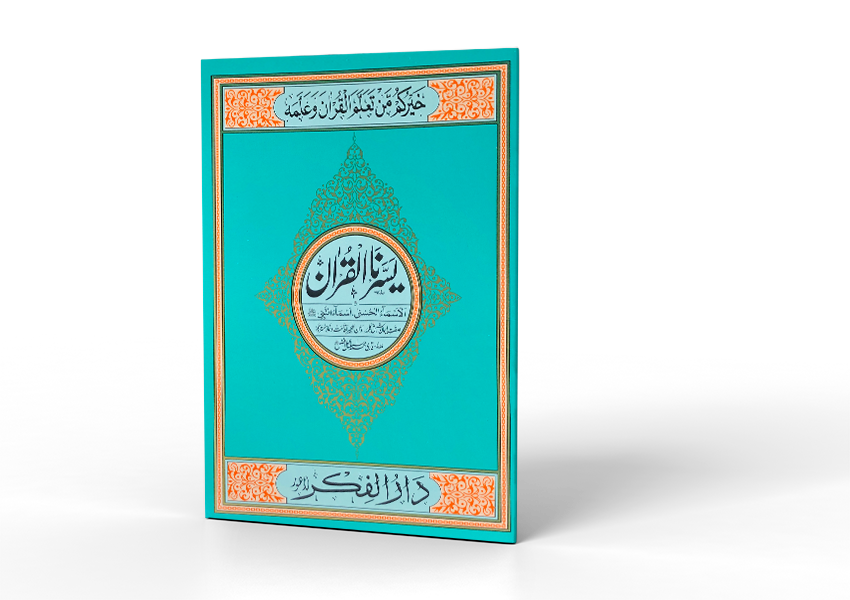
Yassarnal Quran (يَسَّرْنَا الْقُرْآن — “We have made the Quran easy,” from Surah Al-Qamar 54:17) is the reading primer used across Hawza-affiliated madrasas in Iraq, Iran, and Lebanon. Unlike the Noorani Qaida — which is primarily an alphabet and vowels drill — the Yassarnal Quran primer moves directly into Quranic phrases from its earliest pages. The student encounters real Quranic text from lesson 1 of the primer, not sample Arabic sentences designed for pedagogical convenience.
The Yassarnal Quran course at Momineen Quran Center typically runs 3 to 4 months at 3 to 4 sessions per week. By the end of the course, the student reads from the Mushaf independently — Surah Al-Fatiha, Surah Al-Ikhlas, the 4 Quls, and the short Surahs of Juz Amma — at a standard that confirms readiness for the Tajweed course. See how Basic Qaida fits into the Shia Quran Classes for Kids program
Frequently Asked Questions — Basic Qaida Course
Can a complete beginner with no Arabic knowledge start Basic Qaida?
Yes — Basic Qaida is designed specifically for students with zero Arabic knowledge. The course starts at the Arabic alphabet from lesson 1 and requires no prior exposure to Arabic letters, sounds, or Islamic studies. The free trial lesson includes a brief readiness check and the teacher sets the first 4 weeks of lessons accordingly.
Is the Noorani Qaida or Yassarnal Quran primer used?
The teacher selects the primer most appropriate to the student’s background in the free trial lesson. Students from Urdu-speaking households typically use Noorani Qaida. Students from Arabic-speaking households or those in English-medium instruction use Yassarnal Quran. Either primer covers the same 7 core elements — the choice does not affect the 3-month duration or the milestone standard.
How are children taught differently from adults in Basic Qaida?
Children ages 5 to 9 attend 30-minute sessions with visual flashcards, letter games, and progress sticker charts. Adults attend 45-minute sessions with a more direct explanation-focused method. The pace for children is 2 to 3 letters per session; for adults it is 3 to 4 letters per session. The milestone standard is the same for both.
What happens if a student takes longer than 3 months?
The 3-month duration is the typical range for a student attending 3 sessions per week consistently. A student who needs 4 or 5 months completes the same 36 lessons at a slower pace — the milestone is the end-point, not the calendar date. No student is advanced to Yassarnal Quran before the teacher confirms the Basic Qaida milestone.
Is there a free trial for Basic Qaida?
Yes — every enrollment begins with a free 45-minute trial lesson. The trial includes a brief readiness assessment, an introduction to the primer the student will use, and the first 5 Arabic letters as a live teaching sample. No credit card is taken at booking.
Enroll in Basic Qaida — Start with a Free Trial Lesson
The Basic Qaida course at Momineen Quran Center runs 36 lessons over 3 months — 3 sessions per week, 30 minutes for children, 45 minutes for adults. Female teacher available for all girls and women. Start with a free trial before any payment is requested.
Enroll in Basic Qaida — Free Trial Lesson · Ages 5+ and adults · No prior Arabic required · No credit card.
Related Pages
- Shia Quran Courses Online — the full Cluster C hub listing all 11 courses and 3 levels.
- Shia Yassarnal Quran Course — the next step after Basic Qaida completion.
- Shia Tajweed Course Online — full makhraj correction including Ja’fari nuances for ض، ظ، ق.
- Shia Quran Classes for Kids — how Basic Qaida fits into the full 4-stage children’s curriculum.
- Free Trial Shia Quran Class — book a no-commitment trial with a certified Basic Qaida teacher.
Online Quran Classes
Software or Mobile Apps




At Momineen Quran Center, our dedicated team of Shia Quran teacher experts is committed to providing exceptional online Quranic education to Shia Muslims in the USA,UK,Canada,Australia and all of the world.
Contact Info
- apply@onlineshiaqurancenter.com
- +923356597570
- agsdix-smt2-location-onJohar Town, Lahore, Pakistan