
Shia Quran Teacher for Kids Online
Momineen Quran Courses
Child-Specialist, Patience-Trained, Ages 5 to 15

Shia Quran teachers for kids are trained educators specializing in child Quran instruction, using age-appropriate teaching methods including visual aids, storytelling, and repetition-based learning. Teachers hold Shia certification and complete child pedagogical training before being assigned to students under age 15.
4 suitability qualities · 4 engagement methods · Ages 5–15 · Free first class.
Find a Shia Quran Teacher for Your Child — Free First Class · Female teacher assigned automatically for girls · No credit card required.
What Makes a Shia Quran Teacher Suitable for Kids?
4 qualities make a Shia Quran teacher suitable for kids: child pedagogical training alongside Quranic certification, patience and adaptive teaching pace, ability to use visual materials and games, and experience maintaining engagement in 30-minute online sessions. A teacher who holds strong Hawza credentials but has not been trained in child pedagogy is not assigned to students under age 10 — Quranic knowledge and child teaching ability are both required, and verified separately.
1. Child pedagogical training alongside Quranic certification. Every teacher assigned to children under age 15 completes a child pedagogy module before their first student assignment — covering age-appropriate language, managing short attention spans, recognizing signs of frustration or disengagement, and structuring 30-minute sessions for a child’s learning rhythm. The module is required for all kids’ track teachers regardless of Hawza level or years of general teaching experience. A Hawza Kharij scholar who has never taught children completes the module before being assigned to a child student.
2. Patience and adaptive teaching pace. A child who cannot produce a correct makhraj after 5 repetitions is not a slow learner — they are a child learning a new motor skill. The kids’ track teachers are selected specifically for the ability to repeat a correction with full patience across multiple sessions without conveying frustration. The 30-day probationary feedback form for kids’ track teachers includes a specific question on correction patience, rated by the parent after each of the first 4 sessions. A teacher whose patience rating falls below threshold is moved to adult courses.
3. Ability to use visual materials and games. Kids’ track teachers use 4 specific visual tools in sessions: Arabic letter flashcards (digital, shared on screen), color-coded tajweed mark overlays on Surah pages, a progress milestone chart displayed at the start of every session, and Surah completion badges awarded digitally. These tools are standardized across the kids’ faculty — not left to individual teacher preference — so every child gets the same engagement infrastructure regardless of which teacher they are assigned.
4. Experience maintaining engagement in 30-minute online sessions. A 30-minute online session with a child requires the teacher to switch activity type every 7 to 10 minutes — from letter drill to recitation to game to review — to maintain attention without fatigue. Kids’ track teachers demonstrate this session pacing in the Stage 3 teaching methodology interview, where the simulated class is always with a child-level student and the 30-minute structure must include at least 3 distinct activity types.
How Do Teachers Keep Kids Engaged in Online Quran Classes?
Teachers keep kids engaged through 4 methods: visual Arabic letter flashcards, repetitive recitation games, progress sticker charts shared with parents, and reward milestones for Surah completion. Each method is applied within the 30-minute session structure — the sequence and timing are standardized so the child experiences a consistent, predictable session format that builds routine rather than novelty-dependence.
Visual Arabic letter flashcards
Arabic letter flashcards are displayed on screen at the start of every session covering new letters. Each card shows the letter in its 4 forms (isolated, initial, medial, final), a simple word containing the letter, and a color code indicating the makhraj group. The teacher calls the letter, the child repeats, the teacher corrects the makhraj in real time, and the card is moved to a “completed” column visible on screen. Children ages 5 to 7 respond strongly to the visual confirmation of letters moving to the completed column — it converts letter recognition into a visible win rather than an invisible accumulation.
Repetitive recitation games
Recitation games are short structured activities — 5 to 7 minutes — embedded in the middle of every session. The teacher and child alternate reciting a verse or word sequence; the child tries to recite faster or more accurately than the prior round; the teacher introduces a deliberate error in their own recitation and the child is asked to catch it. The error-catching game is particularly effective: it reverses the correction dynamic — the child becomes the checker, not the checked — which reduces performance anxiety and reinforces the tajweed rule through active application rather than passive repetition.
Progress sticker charts shared with parents
Every child in the kids’ track has a digital progress chart maintained by the teacher and shared with the parent after each session. The chart displays the current curriculum stage, the letters or Surahs completed, the letters or Surahs in progress, and a sticker for each session attended. Sticker charts are effective with children ages 5 to 11 because they make invisible progress visible — a child who has been learning for 3 months can see 36 stickers on their chart and understand, in a concrete way, how much work they have done.
Reward milestones for Surah completion
Surah completion milestones are recognized formally — a digital certificate is issued after each Surah is memorized or recited correctly to the teacher’s confirmed standard. The 4 milestone levels are: Juz Amma entry (first 5 Surahs recited correctly), Juz Amma completion (all Surahs of Juz Amma recited correctly), Hifz starter (first 3 Surahs memorized), and Tajweed stage 1 (all basic tajweed rules applied correctly in a full Surah recitation). Certificates are signed by the teacher and the academic head. See the full Shia Quran Classes for Kids program
At What Age Do Children Start with a Shia Quran Teacher?
hildren begin with a Shia Quran teacher from age 5 for letter recognition, progressing to a structured recitation teacher at age 7 when oral and visual learning coordination develops. The teacher assignment changes as the child ages — not the teacher’s identity, but the teaching approach — and the transition between stages is confirmed by the teacher with a written note to the parent before the new approach begins.
Ages 5–6 — Letter recognition teacher
At ages 5 and 6, the teacher functions primarily as a letter recognition guide. Sessions focus on the 28 Arabic letters in isolation — their shape, their sound, and their makhraj — using the flashcard method and oral repetition. Reading is not the goal at this age; recognition and sound production are. Only teachers who list ages 5–6 as a confirmed teaching experience in their credential file are assigned to this age group.
Ages 7–11 — Structured recitation teacher
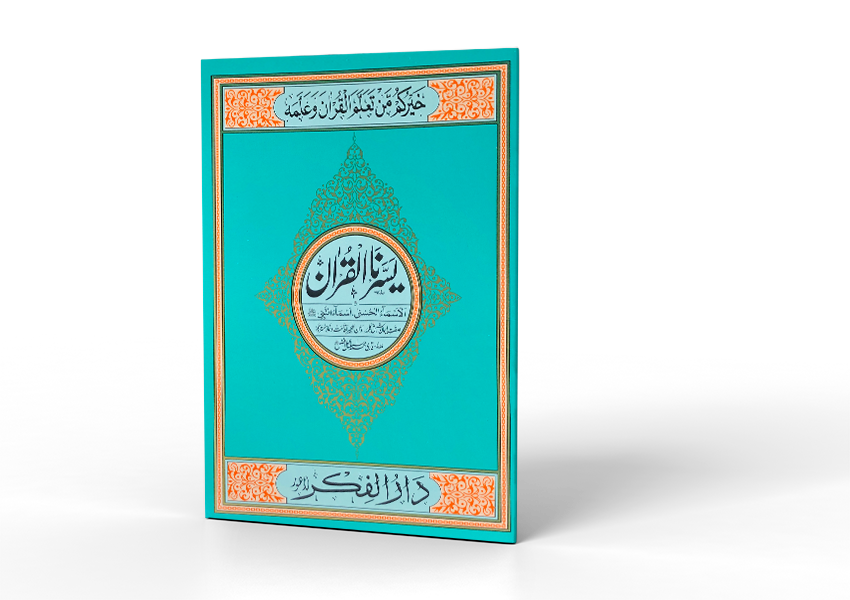
At ages 7 to 11, the teacher introduces structured reading — joining letters into words, words into verses, verses into Surahs. The Yassarnal Quran primer is the primary text; Surah Al-Fatiha is introduced once the student reads from the primer confidently. Tajweed rules are introduced informally first and formally from age 9 onward. See the Basic Qaida Course for Beginners
Ages 12–15 — Advancing curriculum teacher
At ages 12 to 15, the teacher shifts from structured recitation to full tajweed correction, selective Hifz, and the introduction of Quran with Translation or Shia Islamic Studies as parallel subjects. Sessions extend from 30 minutes to 45 minutes at age 12 and above. The teacher introduces the student to the Duas of the Shia tradition at an age-appropriate depth — Dua Kumayl in stages, Salawat with its meaning, and the Munajat of Imam Sajjad (AS) at an introductory level.
Can Parents Monitor Their Child's Sessions?
Parents monitor their child’s sessions through 3 options: joining the first session as an observer, receiving weekly written progress reports from the teacher, and accessing session notes uploaded after each class. All 3 options are available to every parent by default — no special request is needed.
1. Joining the first session as an observer. Parents are encouraged to attend the free trial session and the first 2 paid sessions as observers. The teacher is informed and conducts the session normally. Observation gives the parent a direct view of the teaching method, correction technique, and the child’s response. Parents who cannot attend live can request a session recording (with written consent) for any of the first 3 sessions.
2. Receiving weekly written progress reports. A written progress note is sent to the parent’s registered email after every session. A consolidated weekly summary is sent on Friday covering the full week’s sessions, current curriculum stage, and the milestone the child is working toward. Monthly summaries on the 1st of each month include a comparison with the child’s stage at enrollment so cumulative progress is visible.
3. Accessing session notes via the student portal. Session notes are uploaded to the student portal within 1 hour of each session ending. Parents access notes, the progress chart, milestone certificates, and the homework record via their enrollment credentials. The portal is accessible on desktop and mobile. Session notes are stored for the full enrollment duration and remain accessible for 12 months after enrollment ends.
Parents who want to raise a concern, request a change in teaching approach, or discuss their child’s progress with the teacher directly can book a 15-minute parent consultation session — available at no charge once per month.
Frequently Asked Questions — Shia Quran Teacher for Kids
6 most-asked questions cover the minimum age, female teacher availability, how parents choose the right teacher, session length, progress reporting, and the free trial process.
What is the minimum age for a child to start with a Shia Quran teacher?
The minimum age is 5 years old. At age 5, the focus is letter recognition and oral repetition — not reading. Children below age 5 are not enrolled because reading readiness is not yet established and the session format cannot be meaningfully applied. The free trial assessment confirms the child’s readiness before the first paid session is scheduled.
Is a female Shia Quran teacher available for girls?
A female Shia Quran teacher is assigned automatically for every girl — no separate request needed. The female teacher track for kids covers all 4 curriculum stages and all engagement methods. See the Female Shia Quran Teacher Online page
How do parents choose the right teacher for their child?
Parents choose the right teacher through the free trial — the teacher assigned to the trial is the same teacher who will teach the paid course. The trial gives the parent a direct view of the teacher’s style, patience, and engagement method with their specific child. If the child or parent finds the teacher is not the right fit, a replacement teacher of equivalent credential is assigned at no charge before the first paid session.
How long are sessions for children?
Sessions for children ages 5 to 11 run 30 minutes. Sessions for children ages 12 to 15 run 45 minutes. The 30-minute limit for younger children is based on attention span research applied in Hawza-affiliated madrasas. Session frequency is 3 days per week for ages 5 to 7 and 4 to 5 days per week for ages 8 and above.
How do I know if my child is making progress?
Progress is visible through 3 channels: the digital progress chart updated after every session, the weekly written summary sent every Friday, and the milestone certificates issued at each curriculum stage. The parent can also observe any session without prior notice. Monthly summaries show cumulative progress since enrollment so progress is measurable, not just described.
Is the free trial available for the kids’ track?
Yes — the free 45-minute trial class is available for every child. The trial includes a level assessment by the kids’ track teacher, an introduction to the curriculum stage the child will begin at, and a written 4-week plan sent to the parent after the session. No credit card is taken at booking.
Find a Shia Quran Teacher for Your Child — Free First Class
Every child’s enrollment begins with a free 45-minute trial with a child-specialist Shia teacher — patience-trained, visual-aids-equipped, female for every girl. The teacher conducts a level assessment, shares a written plan, and the parent meets the actual teacher before any payment is requested.
Find a Shia Quran Teacher for Your Child — Free First Class · Ages 5–15 · Female teacher for girls · Available across all major time zones.
Related Pages
- Online Shia Quran Teacher — Cluster B pillar covering all teacher types, qualifications, and the 4-stage vetting process.
- Shia Quran Classes for Kids — the full kids’ curriculum across 4 stages, session structure, and parent progress reporting.
- Basic Qaida Course for Beginners — the Stage 1 entry course for children ages 5 and above.
- Female Shia Quran Teacher Online — Hawza-certified alima, automatic for all girls, all curriculum stages.
- Free Trial Shia Quran Class — book a no-commitment 45-minute trial with a certified kids’ track Shia teacher.
Online Quran Classes
Software or Mobile Apps