
Online Quran Classes for Kids
Momineen Quran Courses
Live 1-on-1 Lessons for Ages 5 to 15

Shia Quran classes for kids provide age-appropriate Quran education using Basic Qaida and Yassarnal Quran, taught by certified Shia teachers via 1-on-1 video sessions. Children ages 5 to 15 learn recitation, Arabic letters, and basic Islamic knowledge in 30-minute structured lessons.
Ages 5–15 · 30 minutes per lesson · 4 curriculum stages · 3–5 days a week.
Book a Free Kids’ Trial Class · Female teacher assigned automatically for girls · No credit card required.
What Do Shia Quran Classes for Kids Include?
Shia Quran classes for kids include 4 foundational components: Arabic alphabet recognition through Basic Qaida, progressive recitation training with Yassarnal Quran, introduction to Shia-tradition duas and prayers, and basic Islamic knowledge aligned with Ja’fari teachings. Each component is introduced at an age-appropriate pace and revised across multiple sessions before the child moves to the next.
1. Arabic alphabet recognition through Basic Qaida. Children learn the 28 Arabic letters, their joining forms, and basic vowel marks (fatha, kasra, damma) using the Noorani Qaida or Yassarnal Quran primer. Letter recognition is paired with correct pronunciation from the start, so the child does not have to unlearn habits later. See the Basic Qaida Course for Beginners →
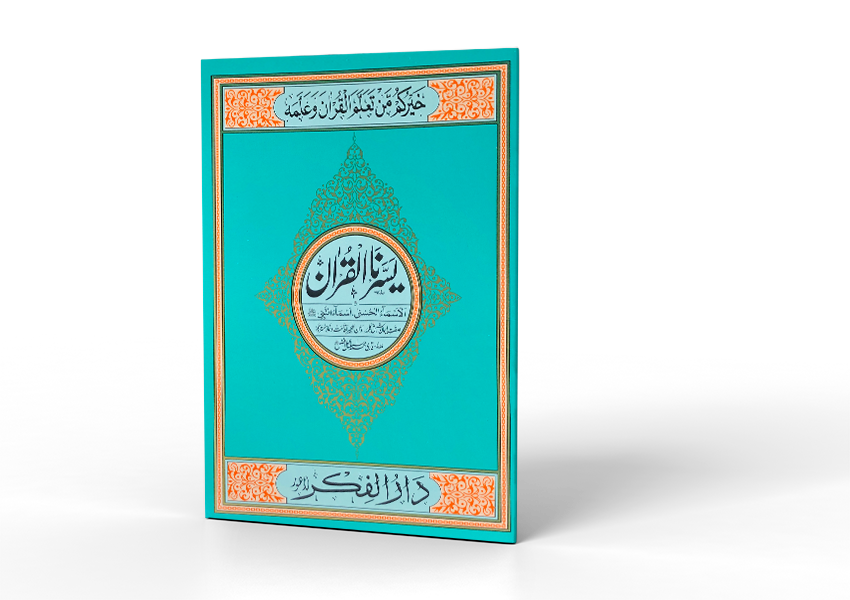
2. Progressive recitation training with Yassarnal Quran. Once Arabic letters are stable, children move to short Surahs through the Yassarnal Quran progression — Surah Al-Fatiha first, then Surah Al-Ikhlas, the 4 Quls, and short Surahs from Juz Amma. Recitation is corrected live by the teacher in every session.
3. Introduction to Shia-tradition duas and prayers. Children learn the daily duas of the Ahlul Bayt at a child-appropriate level: Bismillah, Salawat, the dua before sleep, the dua before eating, the Tashahhud and Salam of Salat, and Dua Qunoot. The duas are taught with their Arabic, English meaning, and a short note on which Imam transmitted them.
4. Basic Islamic knowledge aligned with Ja’fari teachings. Alongside recitation, children build foundational Shia literacy — the names of the 14 Masomeen, the 5 Usool-e-Deen, the basics of wudu and Salat per Ja’fari fiqh, and the meaning of Imamat. Knowledge is introduced in short 5-minute portions at the end of recitation lessons, not as separate study
At What Age Can Kids Start Shia Quran Classes Online?
Children start Shia Quran online classes from age 5, beginning with Arabic letter recognition and oral recitation, while children aged 8 and above progress to structured tajweed rules and full Surah memorization. The starting point depends on the child’s age, prior exposure to Arabic, and reading readiness — assessed by the teacher in the free trial class.
Ages 5–7 (Beginner)
Children ages 5 to 7 begin with Arabic letter recognition, basic vowel marks, and oral repetition of Surah Al-Fatiha and the shortest Surahs of Juz Amma. Sessions at this age run 30 minutes maximum, with the lesson broken into shorter 5–7 minute segments to match attention span. Visual aids, letter flashcards, and gentle repetition are the main learning tools. The Yassarnal Quran primer is introduced toward the end of this stage.
Ages 8–11 (Intermediate)
Children ages 8 to 11 progress to structured tajweed rules — makhraj of letters, basic sifaat, and the rules of noon sakin and tanween. Recitation extends from Juz Amma to Juz Tabarak, and selective hifz of short Surahs (Al-Fatiha, Al-Ikhlas, Al-Falaq, An-Nas, Al-Kafirun) begins at this stage. Children also learn the daily duas in full and start the basics of Salat per Ja’fari fiqh.
Ages 12–15 (Advanced)
Children ages 12 to 15 continue full tajweed correction across the Quran, expand hifz to longer Surahs (Yaseen, Ar-Rahman, Al-Mulk, Al-Waqi’ah), and begin Quran with Translation so they understand what they are reciting. At this age, children also learn the longer duas of the Shia tradition — Dua Kumayl in stages, Dua Tawassul, and the Munajat of Imam Sajjad (AS) — and study basic Shia aqeedah at a level appropriate for their age.
How Are Shia Quran Classes Structured for Children?
Shia Quran classes for children are structured in 30-minute 1-on-1 sessions, 3 to 5 days per week, using visual learning materials, repetition-based recitation practice, and progress tracking shared with parents after each lesson. The structure is designed for consistency over intensity — short, frequent sessions outperform longer, less frequent ones at this age.
Session length and frequency
Every children’s class at Momineen Quran Center runs 30 minutes by default. Younger children (ages 5–7) attend 3 days per week; older children (ages 8 and above) attend 4 to 5 days per week. The teacher and family agree on a weekly schedule at enrollment, with the option to adjust within a 24-hour notice window.
Live one-on-one format on Zoom or Skype
Every session is live and 1-on-1 — never group, never recorded playback. The default platform is Zoom; Skype is available on request. The teacher and child see each other on video so the teacher can correct the child’s mouth shape, breath, and pacing in real time. No special software or paid tools are required — a tablet, phone, or laptop with a webcam is sufficient.
Visual learning aids and repetition
Children’s lessons use visual learning aids — Arabic letter cards, color-coded tajweed marks, and on-screen Surah pages — alongside spaced repetition. Each new portion is repeated with the teacher, then the child reads alone, then the teacher corrects, then the portion is revised at the start of the next session. This 4-step cycle is the same method used inside Hawza-affiliated madrasas, adapted for an online 1-on-1 setting.
Parent progress reports after every lesson
Parents receive a short written progress note after every lesson — what the child read, where the child improved, where attention is needed, and what the next session will cover. A monthly summary is sent on the 1st of each month consolidating the child’s progress through the curriculum stages. Parents are also welcome to sit in on any lesson without prior notice.
Do Female Shia Quran Teachers Teach Kids?
Female Shia Quran teachers are available for all children’s classes at Momineen Quran Center, with a dedicated female teacher track for families who prefer same-gender instruction for their daughters or require it for religious observance. Every girl is paired automatically with a female teacher — no separate request, no waiting list, no extra fee.
The female teachers in the kids’ track hold the same credentials as the male faculty: Hawza-trained or equivalently credentialed Shia alima, vetted through the same 4-stage process — credential verification, recitation audit, teaching demonstration, and Ja’fari fiqh competency check. They specialize in teaching young learners, with training in age-appropriate language, gentle correction technique, and child engagement.
Families who prefer a female teacher for their sons can also request one — the same pairing is offered without restriction. The default is gender-matched only for girls; for boys, the family chooses. See the full Shia Quran Teacher for Kids Online program →
What Is the Curriculum Sequence for Kids?
The curriculum sequence for Shia Quran kids follows 4 stages: Stage 1 (Arabic alphabet, Basic Qaida), Stage 2 (Yassarnal Quran, short Surahs), Stage 3 (tajweed rules, extended recitation), and Stage 4 (hifz of selected Surahs and duas). The teacher confirms each stage milestone with the family before moving the child forward — no stage is skipped to satisfy a schedule.
Stage 1 — Arabic alphabet and Basic Qaida. The child learns the 28 Arabic letters with correct makhraj, the joining forms (initial, medial, final, isolated), and the three short vowel marks. Reading exercises move from individual letters to two-letter words and short sentences. Stage 1 typically takes 3 to 6 months depending on the child’s age and consistency.
Stage 2 — Yassarnal Quran and short Surahs. The child reads from Yassarnal Quran, then progresses to Surah Al-Fatiha, Surah Al-Ikhlas, the 4 Quls (Al-Kafirun, Al-Ikhlas, Al-Falaq, An-Nas), and the shortest Surahs of Juz Amma. Recitation is corrected live; rules are introduced informally before they are named.
Stage 3 — Tajweed rules and extended recitation. The child is introduced to formal tajweed rules — makhraj, sifaat, noon sakin, meem sakin, the rules of madd, and stopping (waqf). Recitation extends from Juz Amma into Juz Tabarak and beyond. The Shia tajweed manual is used alongside live correction.
Stage 4 — Hifz of selected Surahs and duas. The child memorizes a selected set of Surahs commonly recited in daily Salat — Al-Fatiha, the 4 Quls, Al-Asr, Al-Kawthar, Al-Fil — and the daily duas of the Shia tradition (Dua Qunoot, the Tashahhud, Salawat, the dua after Salat). Full hifz of the Quran is offered as an optional extended track for children who want to continue.
Frequently Asked Questions — Shia Quran Classes for Kids
6 most-asked questions about Shia Quran classes for kids cover the starting age, session length, female teacher availability, curriculum pace, trial class options, and progress reporting to parents.
What is the youngest age a child can start Shia Quran classes?
The youngest age a child can start Shia Quran classes at Momineen Quran Center is 5 years old. At age 5, the focus is on letter recognition, oral repetition of Surah Al-Fatiha, and gentle exposure to Arabic sounds. Children below age 5 are not enrolled, since reading readiness is not yet established.
How long is a kids’ Shia Quran class?
A kids’ Shia Quran class runs 30 minutes per session. Sessions are held 3 days per week for ages 5 to 7 and 4 to 5 days per week for ages 8 and above. The 30-minute length is matched to children’s attention span and is the same standard used inside Hawza-affiliated madrasas for this age group.
Can I request a female Shia Quran teacher for my daughter?
A female Shia Quran teacher is assigned automatically for every girl, with no separate request needed. Families who want a female teacher for a son can also request one. The female teacher track covers all 4 curriculum stages, including Basic Qaida, tajweed, and the early stages of hifz.
How fast does a child move through the curriculum?
A child moves through the curriculum at the pace the teacher confirms — Stage 1 typically takes 3 to 6 months, Stage 2 takes 6 to 12 months, Stage 3 takes 1 to 2 years, and Stage 4 is open-ended depending on the family’s hifz goal. The teacher does not advance the child to the next stage until the milestone is firm.
Is there a free trial class for kids?
Yes — every child’s enrollment begins with a free 45-minute trial class that includes a Quranic level assessment, a teacher-fit check, and a personalized starting plan. No credit card is taken at booking, and no payment is taken until the family decides to continue.
How do parents know if the child is making progress?
Parents receive a short written progress note from the teacher after every lesson, plus a consolidated monthly summary on the 1st of each month covering the child’s stage, recitation quality, hifz portions completed, and the focus areas for the coming month. Parents are also welcome to sit in on any lesson without prior notice.
Book a Free Trial Shia Quran Class for Your Child
Every child’s enrollment at Momineen Quran Center begins with a free 45-minute trial class. The teacher conducts a level check, recommends a starting stage, and shares a written plan with the family — all before any payment is requested. A female teacher is assigned automatically for every girl.
Book Your Free Trial Class · Available across US, UK, Canada, Australia, Europe, and Gulf time zones.
Related Pages
- Online Shia Quran Classes — the main pillar covering all 7 class types and 5 audience tracks.
- Shia Quran Teacher for Kids Online — credentials, vetting, and teaching method of the kids’ faculty.
- Female Shia Quran Teacher Online — the female teacher track for women, girls, and families who request it.
- Basic Qaida Course for Beginners — the Stage 1 entry course for children and reverts.
- Free Trial Shia Quran Class — book a no-commitment trial with a certified Shia teacher.
Online Quran Classes
Software or Mobile Apps