
Female Shia Quran Teacher Online
Momineen Quran Courses
Hawza-Certified Alima, Private Sessions, All Subjects

Female Shia Quran teachers are certified Shia alimas who teach Quran recitation, tajweed, and Islamic studies to women and girls via private one-on-one online sessions. All female teachers hold Hawza-level certification or equivalent qualifications and teach in English, Urdu, Arabic, and other languages.
8 subjects taught · 4 verification steps · 100% auto-assigned to women · Free first session.
Book a Session with a Female Shia Teacher — Free Trial · Automatic for all women and girls · No separate request needed.
Who Are Female Shia Quran Teachers?
Female Shia Quran teachers are certified Islamic educators trained in the Shia scholarly tradition, holding qualifications from Hawza institutions or accredited Islamic universities, with specialization in women’s Quran education and Ja’fari fiqh application for women’s Ibadah. They are known in the Arabic-Islamic tradition as Shia alimas — women scholars who have studied the Quran, tajweed, jurisprudence, and Shia theology from primary sources.
The female scholarly tradition in Shia Islam has a long and documented history. Women scholars in the Shia tradition — from Sayyida Fatimah al-Zahra (AS) and Sayyida Zaynab (AS) to the recognized female scholars of Hawza Najaf, Hawza Qom, and Hawza Mashhad in modern times — have transmitted Quranic knowledge, jurisprudential rulings, and Islamic education within their communities. At Momineen Quran Center, every female teacher is part of this continuing tradition: a certified alima who has studied within a Hawza-affiliated or equivalent program and passed the same 4-stage vetting process as the male faculty.
Female teachers at Momineen Quran Center are not a secondary or reduced track. They are assigned to all 8 subjects in the female curriculum, and their credential files are held to the same standard as male teachers. The only curriculum difference is the inclusion of Ahkam al-Nisa as a subject-matter extension — an area where a female alima’s training and authority is specifically recognized in the Ja’fari scholarly tradition. See the full Online Shia Quran Teacher page
What Subjects Do Female Shia Quran Teachers Teach?
Female Shia Quran teachers teach 8 subjects: Basic Qaida, Tajweed, Quran Recitation, Quran Memorization (Hifz), Quran with Translation, Tafseer, Islamic Studies, and Shia Prayer and Ahkam — the same full curriculum available with male teachers. Each subject is taught from Shia scholarly sources, with Ahkam al-Nisa integrated within Tajweed, Salah, and Fiqh sessions by the female teacher from her area of specialization.
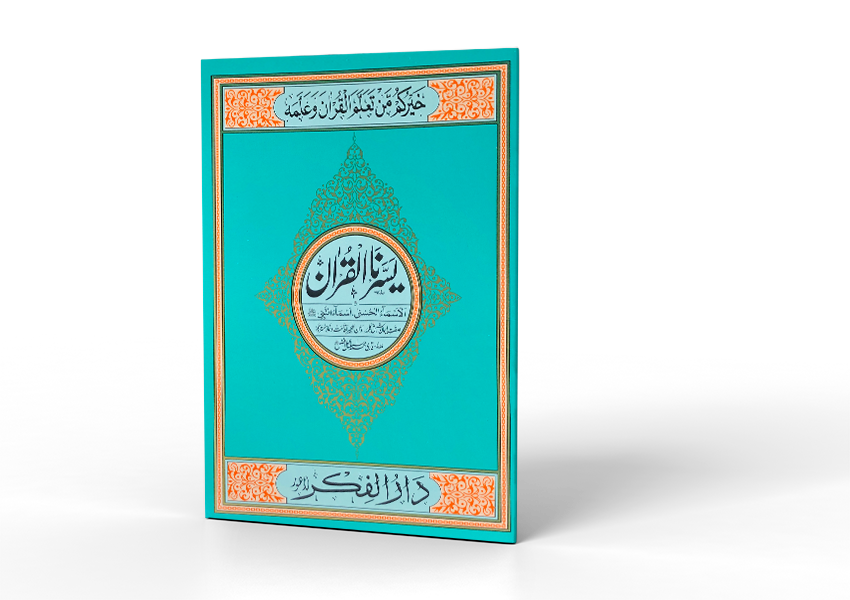
1. Basic Qaida. Arabic alphabet recognition, vowel marks, joining forms, and the first reading exercises — taught through the Noorani Qaida or Yassarnal Quran primer. Entry level for girls ages 5 and above and for adult women beginning or returning to Quran study.
2. Tajweed (Shia method). Full tajweed correction — makhraj, sifaat, noon sakin, meem sakin, madd, waqf — per the Shia recitation tradition. The female teacher integrates the Ahkam al-Nisa rulings on Quran recitation during specific times, which are part of Tajweed study for women and cannot be properly taught without the teacher’s knowledge of those rulings.
3. Quran Recitation. Fluent, correctly pronounced Quran reading from the Mushaf — for a student who already reads but has not formally studied tajweed rules.
4. Quran Memorization (Hifz). Structured memorization on the sabaq, sabqi, and manzil schedule, adapted to the woman student’s household schedule — typically 4 to 5 days per week at 45 minutes. The female teacher tracks the student’s daily sabaq and sends a written progress note after every session.
5. Quran with Translation. Verse-by-verse reading with concurrent English translation and contextual Shia scholarly notes from Al-Mizan by Allama Tabataba’i. Gives the student a direct understanding of what she recites in daily Salah without committing to full Tafseer study.
6. Tafseer. Verse-by-verse exegesis using Al-Mizan fi Tafsir al-Quran by Allama Tabataba’i, Tafseer al-Burhan, and narrations from the 12 Imams. The female teacher contextualizes Quranic themes in terms of their relevance to women’s Ibadah and the Shia scholarly tradition of female learning.
7. Islamic Studies. A structured course covering the 5 Usool-e-Deen, the 14 Masomeen, Shia history, the duas of the Ahlul Bayt, and basic Ja’fari fiqh. Available as a standalone subject or as a parallel track alongside Quran study.
8. Shia Prayer and Ahkam. The Ja’fari method of Wudu, Salah, fasting, and the daily fiqh rulings specific to women — taught with full reference to Ayatollah Sistani, Ayatollah Khamenei, and Ayatollah Makarem Shirazi, or the student’s own Marja on request. This is where the female teacher’s authority in Ahkam al-Nisa is most directly applied. See the full Shia Quran Classes for Women program
How Are Female Shia Quran Teachers Verified?
Female Shia Quran teachers are verified through a 4-step process: credential check (Hawza certificate or university degree), recorded recitation assessment evaluated by a senior female scholar, teaching methodology interview, and background verification. Every female teacher on the Momineen Quran Center faculty has passed all 4 steps before being assigned to any student.
1. Credential check. The applicant submits her Hawza certificate, university degree transcript, or verified teaching references. Hawza certificates from Hawza Najaf, Hawza Qom, and Hawza Mashhad are cross-referenced with the issuing institution’s records. University transcripts are checked against accreditation databases. No application proceeds to step 2 without a verified credential.
2. Recorded recitation assessment evaluated by a senior female scholar. The applicant records a recitation of Surah Al-Fatiha, a passage from Juz Amma, and Ayat al-Kursi. The recording is reviewed by a senior female scholar at Momineen Quran Center — a Hawza-credentialed alima at the Sutuh level or above — who produces a written report on makhraj accuracy, sifaat application, and tajweed rule compliance per the Shia tradition. A senior female scholar is used specifically so that the evaluation is conducted within an all-female scholarly chain.
3. Teaching methodology interview. The applicant conducts a 30-minute simulated class observed by the female academic coordinator, assessed on 4 dimensions: explanation clarity, error correction technique, lesson pacing, and student engagement. The interview also includes a 5-question Ahkam al-Nisa competency check covering the rulings on Quran recitation during specific times, the Wudu and Salah rulings specific to women, and the handling of these topics with a student encountering them for the first time.
4. Background verification. Contact details, identity, and prior institutional affiliations are verified. References from prior students or institutions are contacted directly. A teacher whose background check raises any concern is not admitted to the faculty regardless of her academic credential.
Why Do Families Prefer Female Shia Quran Teachers for Girls?
Families prefer female Shia Quran teachers for girls for 3 reasons: alignment with Ja’fari fiqh guidance on same-gender instruction, comfort in discussing women’s Ibadah questions without hesitation, and trust that the teacher understands the specific Islamic rulings applicable to female students. Each reason is grounded in a practical educational reality, not only a cultural preference. Read about Ja’fari Fiqh: Shia Islamic Jurisprudence
1. Alignment with Ja’fari fiqh on same-gender instruction. The recognized Marjas — Ayatollah Sistani, Ayatollah Khamenei, and Ayatollah Makarem Shirazi — address same-gender instruction in their practical rulings on education. In the Ja’fari tradition, a woman’s Quran education is an act of Ibadah, and the learning environment is governed by the same principles as other acts of worship. A female-only session removes any ambiguity around the ruling and lets the student focus on the lesson without concern about the fiqh position of her learning arrangement.
2. Comfort in asking about women’s Ibadah without hesitation. Questions about Salah during specific times, fasting rulings, the rules of purity in relation to Quran recitation, and the Ahkam that apply specifically to women arise naturally in any serious Quran lesson. A female student asking these questions to a female teacher does so directly, without embarrassment. The educational quality of the session is higher when questions are asked freely — the teacher can correct a misunderstanding, confirm a ruling from the Marja, or refer the student to the relevant Risala Amaliyya section, all in the same session.
3. Trust in the teacher’s knowledge of female-specific Islamic rulings. A female Shia alima who has studied Ahkam al-Nisa from primary Ja’fari sources knows the rulings from the inside. She has studied them as part of her own Ibadah, not as an abstract academic exercise. When a student asks whether a specific Quran recitation is valid under a specific circumstance, the female teacher’s answer is based on the same fiqh she applies to her own worship. See also Shia Quran Classes for Reverts
How Do I Book a Female Shia Quran Teacher?
Booking a female Shia Quran teacher requires 3 steps: selecting ‘female teacher’ on the booking form (or simply submitting as a female student — the pairing is automatic), choosing your time slot across your available time zone, and completing the free trial class where teacher-student compatibility is assessed before enrollment.
- Submit the booking form — female teacher assigned automatically. Female students are paired with a female teacher automatically. The “Female Teacher Required?” field is provided for male students and families of boys who request one — female students do not need to use it. Submit your name, email, time zone, preferred time window, student type, and course interest. Go to the Free Trial Booking Form
- Confirm via email and select your time slot. A confirmation email arrives within 2 hours with the assigned female teacher’s name, her credential summary (institution, level, years of teaching), and the available session slots in your local time zone. The female teacher’s slot range covers EST, PST, GMT, CET, AEST, and Gulf Standard Time.
Complete the free 45-minute trial. The trial class is conducted by the same female teacher who will teach the paid course — not a separate assessor. The trial includes a level assessment, a subject recommendation, and a written 4-week plan. If the student finds the teacher is not the right fit, a replacement female teacher of equivalent credential is assigned at no charge before the first paid session.
Frequently Asked Questions — Female Shia Quran Teachers
7 most-asked questions about female Shia Quran teachers cover availability, subjects taught, qualifications, session languages, teaching methodology for women-specific fiqh, replacement policy, and trial class terms.
Are female Shia Quran teachers available for every subject?
Female Shia Quran teachers are available for all 8 subjects — Basic Qaida, Tajweed, Recitation, Hifz, Quran with Translation, Tafseer, Islamic Studies, and Prayer and Ahkam. No subject in the female curriculum is taught by a male teacher unless the student specifically requests otherwise.
What qualifications do the female teachers hold?
Female teachers hold Hawza certification from Hawza Najaf, Hawza Qom, or Hawza Mashhad, or an equivalent Islamic university degree from Al-Mustafa International University, the University of Religions and Denominations, or equivalent. Teachers admitted on teaching experience hold a minimum 5-year verified record and pass the recorded recitation assessment and Ahkam al-Nisa competency check.
What languages are female teachers available in?
Female teachers are available in English (default for US, UK, Canada, Australia, and Europe), Urdu, Farsi, and Arabic. French and Spanish are available on request based on current teacher availability. Arabic is always used as the recitation language regardless of instruction language.
How does a female teacher handle Ahkam al-Nisa questions during a lesson?
A female teacher handles Ahkam al-Nisa questions directly within the lesson — she answers from her knowledge of the relevant Ja’fari ruling, attributes it to the appropriate Marja (Sistani, Khamenei, or Makarem Shirazi by default, or the student’s own Marja on request), and notes the source reference so the student can verify independently. Questions outside her specialization are referred to the academic head with a written follow-up within 48 hours.
What happens if a student is not satisfied with her assigned female teacher?
A replacement female teacher of equivalent credential is assigned at no charge if the student reports dissatisfaction after the free trial or within the first 2 paid sessions. The replacement is arranged within 48 hours of the written request. No fee is charged during the transition period.
Can a mother and daughter enroll with the same female teacher?
A mother and daughter can enroll with the same female teacher if she has sufficient availability and if their course levels do not conflict. A mother on the Standard package (5 sessions/week) and a daughter on the Starter package (3 sessions/week) can share the same female teacher across separate sessions. The 15% family discount applies to the lower-priced enrollment.
Is the free trial conducted by the female teacher who will teach the course?
Yes — the free 45-minute trial class is conducted by the same female teacher who will teach the paid course. The student meets her actual teacher in the trial, receives a level assessment and written subject plan, and decides whether to continue — all before any payment is requested.
Book a Session with a Female Shia Teacher — Free Trial
Every female student’s enrollment begins with a free 45-minute trial with a Hawza-certified female Shia teacher — automatic pairing, private 1-on-1 on Zoom, level assessment, and a written subject plan. No credit card required. No prior Arabic required.
Book a Session with a Female Shia Teacher — Free Trial · Available across US, UK, Canada, Australia, Europe, and Gulf time zones.
Related Pages
- Online Shia Quran Teacher — Cluster B pillar covering all teacher types, qualifications, and the 4-stage vetting process.
- Shia Quran Classes for Women — the full women’s curriculum across all 8 subjects, including privacy and scheduling details.
- Shia Quran Classes for Reverts — female teachers with scheduling priority for revert applicants.
- Ja’fari Fiqh: Shia Islamic Jurisprudence — the jurisprudential basis for same-gender instruction and Ahkam al-Nisa.
- Free Trial Shia Quran Class — book a no-commitment 45-minute trial with a certified female Shia teacher.
Online Quran Classes
Software or Mobile Apps